The dog,
by the book.
The official AKC breed standard, with a labelled diagram and notes in plain language. Then everything that doesn't fit on one page — temperament, lifespan, health, exercise, training, and what it really takes to live with one.
Anatomy, labelled
FIG. 01 · ADULT MALE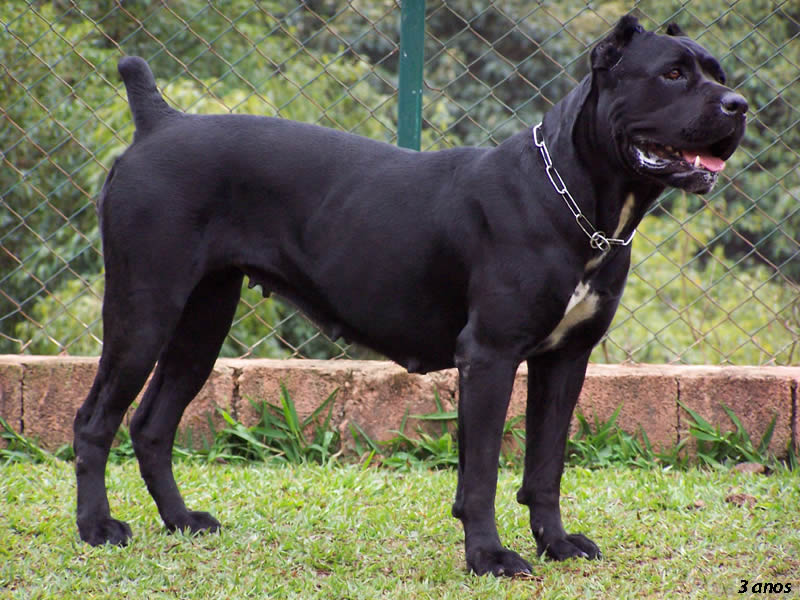
Head
01Large, typical of molossoid breeds. Slightly arched skull with a definite stop. The most distinctive feature of the breed.
Neck
02Slightly arched, muscular. Equal in length to the head, well-set into the shoulders.
Topline
03Withers stand higher than the croup. Back is straight, very muscular and firm.
Forequarters
04Strong and muscular, well-proportioned to the size of the dog. Straight from the front.
Hindquarters
05Powerful and strong as a whole, in harmony with the forequarters. Long, wide thighs.
Tail
06Set fairly high, very thick at the root. Customarily docked at the fourth vertebra where permitted; natural tails also acceptable.
Body length 10% greater than height at withers.
What the standard rules out
- Excessive undershot bite
- Total depigmentation of nose
- Total depigmentation of eye rims
- Yellow bird-of-prey eyes
- Cropped tail above 4th vertebra
In numbers, more or less.
Described as “softhearted” and eager to please despite their imposing appearance. Natural guardians who are wary of strangers — early and ongoing socialization is critical for confidence without aggression.
Best suited for families with older children (8+); the AKC rates compatibility with young children at 3/5 because their size poses an unintentional-injury risk even in well-trained dogs. Generally good with other dogs raised together from puppyhood; can be aggressive with same-sex dogs, especially males.
Not recommended for first-time dog owners. Requires consistent, lifelong training from someone who understands large, assertive breeds.
"A working dog that wants to be near you, doing nothing in particular."
9.29 years median (per a 232-dog peer-reviewed study).
Black brindle and brindle Cane Corsos tend to live slightly longer (just over 10 years on average). Larger body size within the breed correlates with faster aging and higher cancer incidence.
Health watchlist
- 01 Hip dysplasia (≈50% of breed)
- 02 Bloat / GDV — feed two smaller meals per day
- 03 Eye conditions: ectropion, entropion, cherry eye
- 04 Heart disease (≈18% by middle age)
- 05 Elbow dysplasia
- 06 Hypothyroidism (manageable with medication)
- 07 Demodectic mange
Required by breed club: OFA hip evaluation (after age 2) or PennHIP (after 16 weeks); OFA elbow evaluation; cardiac evaluation registered with OFA. Recommended: ACVO eye exam; autoimmune thyroiditis evaluation.
60–90 minutes daily, ideally split across two sessions.
More active than most giant breeds — athletic and driven. Physical activity, mental stimulation, and social interaction are all important. Puppies need shorter, more frequent sessions to protect developing joints; seniors need gentler activity adjusted for joint health. Under-exercised Cane Corsos develop destructive behavior and anxiety.
Highly intelligent — comparable to German Shepherds in adaptive and emotional intelligence.
Excels at independent problem-solving, which served them well as guardian dogs but can manifest as stubbornness in training. Responds best to positive reinforcement; sensitive to harsh corrections. Start early, stay consistent, and prioritize the critical socialization window between 3–12 weeks.
Experienced dog owners with space, time, and patience for a 110-pound guardian.
Thrives in homes with at least 1,000 sq ft of living space and a fenced yard (minimum 6 ft, with deep foundations). Apartment living is possible with significant effort but not ideal. Best in moderate climates — heat is the bigger risk for a muscular black-coated dog. Cannot be left alone for extended periods; this is not an outdoor-only dog.